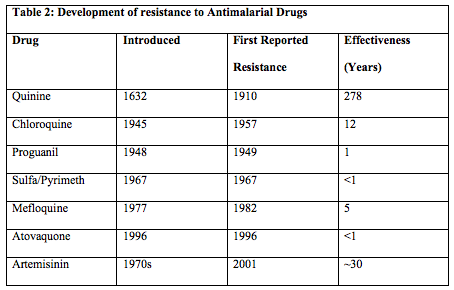
P. falciparum which causes majority of malarial death has developed resistance to almost all of the antimalaria drugs. While natural products such as quinine and artemisinin have taken decades to succumb to resistance, synthetic drugs have perished within a few months to years.
WHO now advocates Artemisinin Combination Therapy for the treatment of P. falciparum malaria where resistance to chloroquine and Sulfa/Pryimeth has been established. Combinations of artesunate with either sulfa/pyrimethamine, mefloquine, amodiaquine or pyronaridine; artemether with lumefantrine or dihydroartemisinin with piperaquine are now in use in different parts of the world.
There are many reasons why the individuals who need these drugs can get them, or cannot get them in sufficient amount. The new, effective drugs being far more expensive than chloroquine and SP, the impoverished governments are unable to acquire supplies that could put a dent in the problem.
It has been estimated that with 215-374 million cases of falciparum malaria occur annually. This means approximately 113 to 314.5 million adult treatments will be needed, requiring $1.6 billion-$3.4 billion US dollars per year to provide ACT to every case globally.
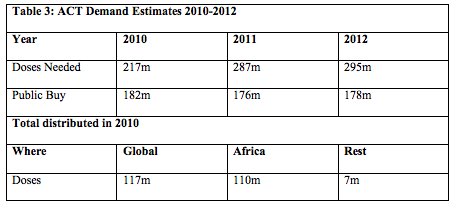
From Table 3 it is clear that the global supply of ACT doses will not meet the needs of everyone. It is no secret that lack of funding is driving malaria resurgence and all its related deaths.